

The Meaning of the Cardinal Bird in Christmas Greeting Cards
Among all the symbols that grace Christmas greeting cards, few are as beloved or meaningful as the cardinal bird. With its bright red feathers standing out against the snowy winter landscape, the cardinal captures the essence of Christmas — warmth in the cold, color in the gray, and love that endures through time. More than just decoration, this bird carries deep emotional and cultural symbolism in American holiday traditions. In this article, we’ll explore the meaning of the cardinal bird in Christmas greeting cards, uncovering how this timeless image connects art, spirituality, memory, and the enduring spirit of human connection.
A Flash of Red in the Winter White
When the landscape turns quiet and pale under a blanket of snow, the sudden appearance of a bright red cardinal feels almost miraculous. Against the cold stillness of winter, this bird’s vibrant feathers seem to glow with life and warmth. In American culture, the cardinal has long been seen as a symbol of hope, renewal, and spiritual connection — themes that resonate deeply with the spirit of Christmas. When people choose a Christmas greeting card with the image of a cardinal perched on a snowy branch, they are not merely selecting a pretty picture; they are expressing a belief that beauty, warmth, and love can shine even in the darkest, coldest season. It’s a message that says: “Life endures. Love remains.”
A Messenger of Memory and Presence
In many American households, the cardinal is more than a bird — it’s a messenger. There’s a popular saying: “When a cardinal appears, a loved one is near.” This belief ties the cardinal to remembrance and spiritual presence. It suggests that when we see this red bird, we are being visited by the spirit of someone we have lost. On a Christmas card, this symbol carries immense emotional weight. It allows the sender to bridge the gap between the living and those who are gone, to remind the receiver that love transcends distance and time. A cardinal card becomes a gentle way to say, “I’m thinking of you — and of those we still hold in our hearts.” During the holidays, when nostalgia and longing often mingle with joy, this symbolism offers comfort and peace.

The Red Feather of Faith and Passion
The cardinal’s red plumage is striking not just for its beauty, but for what it represents. Red, in the Christian tradition, is the color of the Holy Spirit and of Christ’s sacrifice, a vivid reminder of divine love and courage. In secular terms, red also represents vitality, passion, and emotional warmth, all qualities that bring life to winter’s stillness. When artists and designers include the cardinal in Christmas card imagery, they are infusing that design with layers of meaning: spiritual strength, deep affection, and the resilience of the human heart. The bird’s color becomes a symbol of energy that refuses to fade, even when surrounded by snow. It whispers a truth Americans often hold close: that faith and love are not diminished by hardship, but made stronger by it.
A Cultural Bridge Between Nature and Spirit
Americans have always had a strong emotional connection with nature. From Emerson’s essays to modern mindfulness movements, the natural world has been seen as a reflection of spiritual truth. The cardinal, with its year-round presence and its devotion to song even in the dead of winter, embodies this harmony between nature and spirit. Including the cardinal on a Christmas card allows people to reconnect with that sense of wonder and reverence for the natural world. It’s as if the bird itself stands as a witness to the balance between earthly beauty and heavenly promise. For many, the cardinal represents the quiet assurance that life is cyclical, that even after death or dormancy, renewal is coming.

A Symbol of Enduring Love and Family Bonds
Beyond faith or folklore, the cardinal also represents the enduring bonds of family. These birds are known for their loyalty, they often mate for life and are rarely seen far apart. Their songs echo through the winter air as a duet between partners, a beautiful expression of connection and constancy. On a Christmas card, this symbolism feels particularly fitting. The holidays are a time when families come together, often across long distances, to celebrate shared love and belonging. A card featuring two cardinals nestled close on a snowy branch may say more than words ever could, that true love, whether romantic or familial, is steadfast and enduring.
The Emotional Resonance in Art and Design
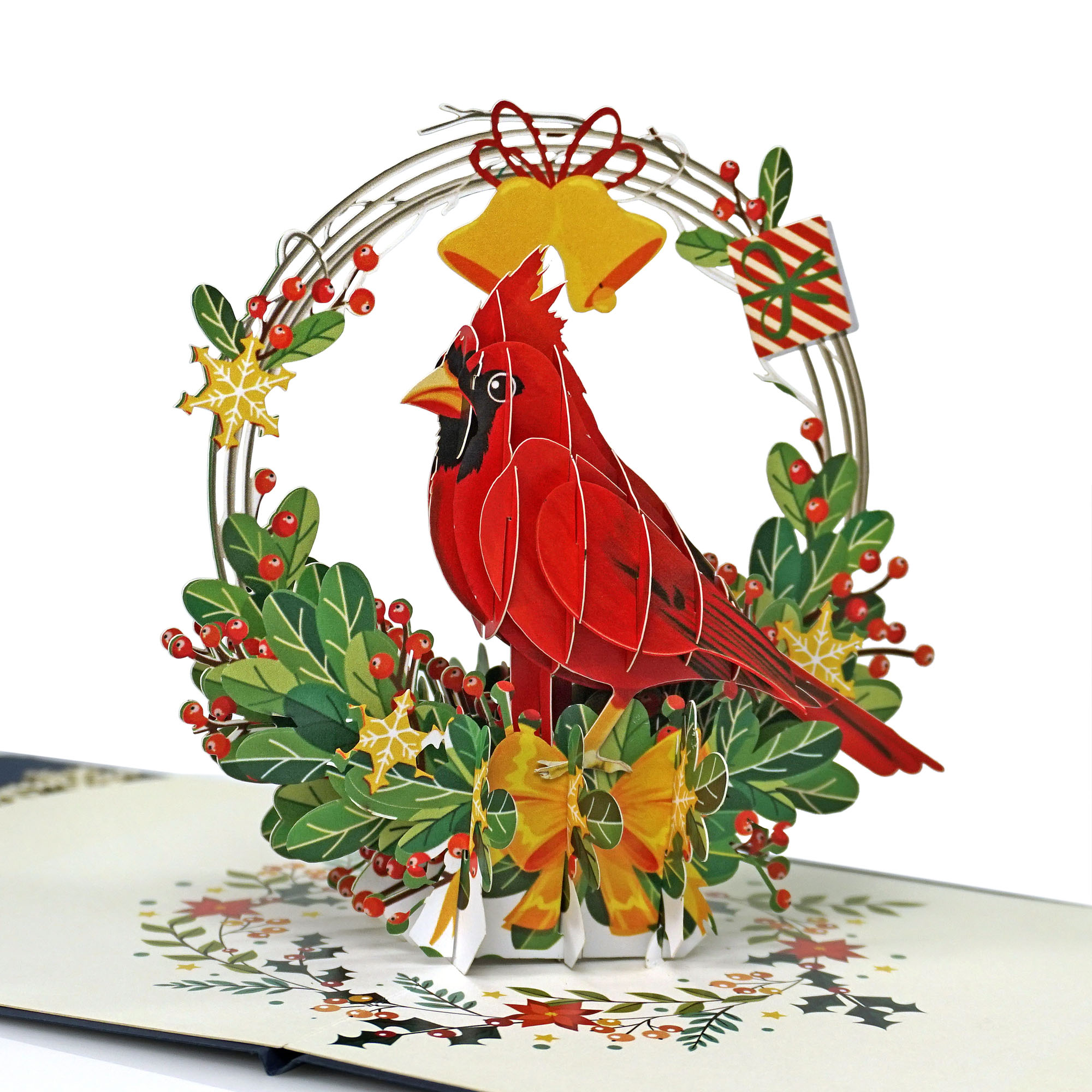
From a design perspective, the cardinal is one of the most visually compelling symbols in holiday art. Its red color complements the green of pine trees and the white of snow, creating a classic Christmas palette that instantly evokes cheer and nostalgia. But what gives the cardinal its lasting power is not just its beauty, it’s the story it tells. In American holiday card design, the cardinal has evolved from a decorative motif into an emblem of emotional storytelling. Whether featured in a traditional painting-style card or a modern 3D pop-up greeting card, it speaks to the heart in a universal way. The image is simple, but the feelings it stirs, remembrance, hope, love, endurance — are complex and profound.
The Cardinal as a Reminder of Small Miracles
Christmas, at its core, is about the extraordinary found within the ordinary, the miracle of light born in darkness. The cardinal captures that theme perfectly. Seeing one outside your window on a gray winter day feels like a tiny miracle, a burst of joy against the dullness. A Christmas card featuring a cardinal offers that same moment of quiet wonder. It invites the receiver to pause and feel gratitude for life’s small, vivid gifts. In an age where digital messages replace handwritten notes, such cards bring back the sense of presence and mindfulness that the holidays are meant to inspire.
A Reflection of American Values at Christmastime
You May Also Be Interested In
The Meaning and Use of Hummingbird Greeting Cards
Celebrate Saint Patrick’s Day with a Green 3D Popup Greeting Card
Celebrate the Joy of the Season with Pop Up Dog Christmas Cards